Palantir use cases should not be read as a customer list. The useful pattern is multi-source data, Ontology, permissions, workflows, governed action, and feedback.
系列:Palantir Series 6 / 8
- 1 Palantir for Beginners: What Kind of Software Company Is It?
- 2 Foundry: Why Palantir Turns a Data Platform Into an Operating System
- 3 Ontology: Why It Is the Core of Palantir
- 4 AIP: Why Enterprise Agents Cannot Be Just Chatbots
- 5 Apollo: Why Continuous Delivery Is a Palantir Advantage
- 6 Use Cases: How Palantir Lands in Manufacturing, Healthcare, Energy, and Defense 当前
- 7 Business Model: Why Palantir Does Not Look Like Traditional SaaS
- 8 Controversies: Privacy, Government Contracts, Military Use, and Governance Boundaries

The easiest mistake when reading Palantir case studies is to turn them into a customer list.
This agency used it. This hospital used it. This manufacturer used it. This energy company used it. Those facts matter, but they do not explain the software.
The more useful question is what these industries have in common.
Palantir often appears where organizations face the same kind of complexity:
many data sources, complex objects, strict permissions, real-world actions, cross-functional coordination, and continuous feedback.
The Common Implementation Pattern
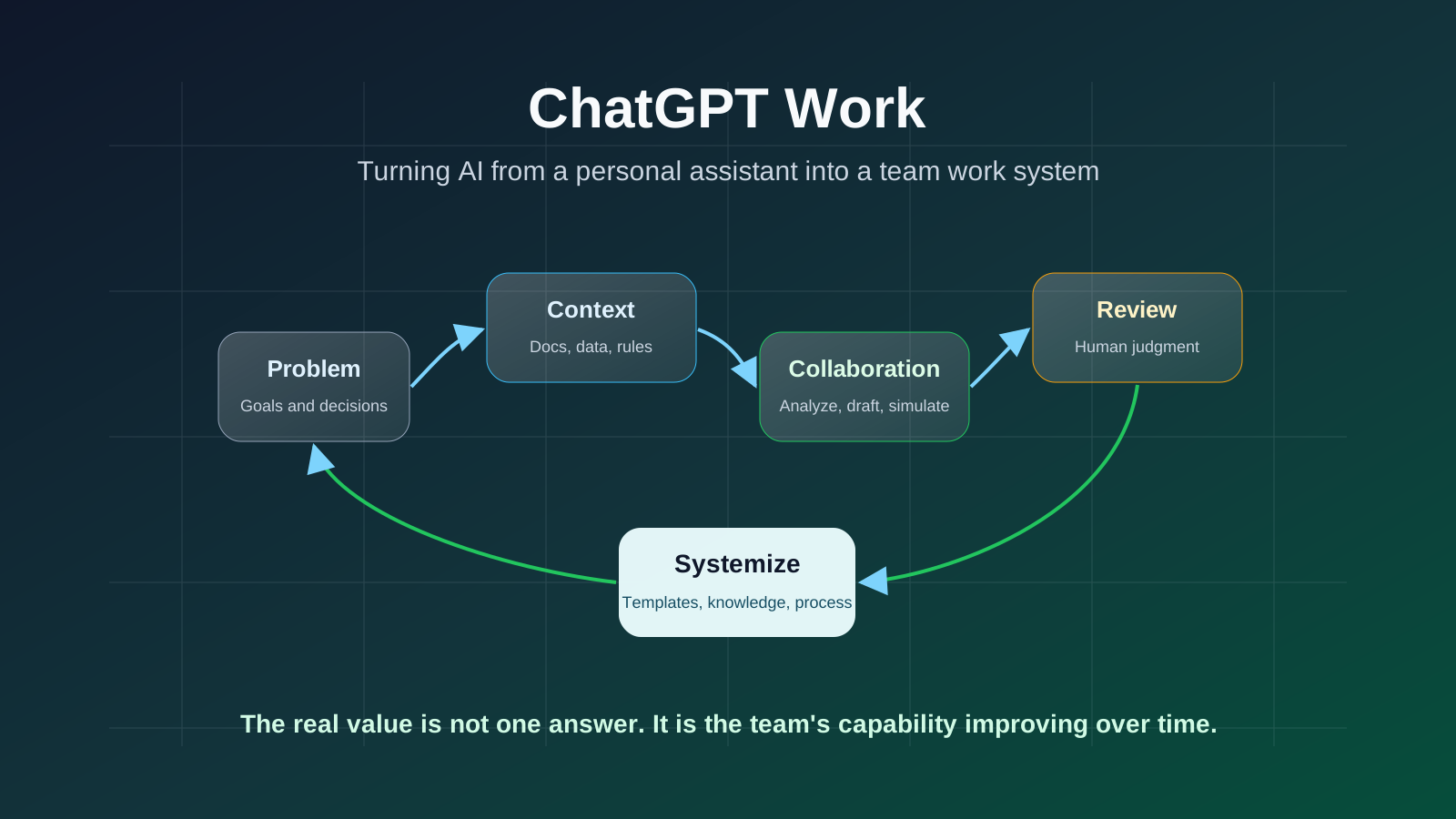
Across manufacturing, healthcare, energy, and defense, Palantir deployments can often be abstracted into six steps:
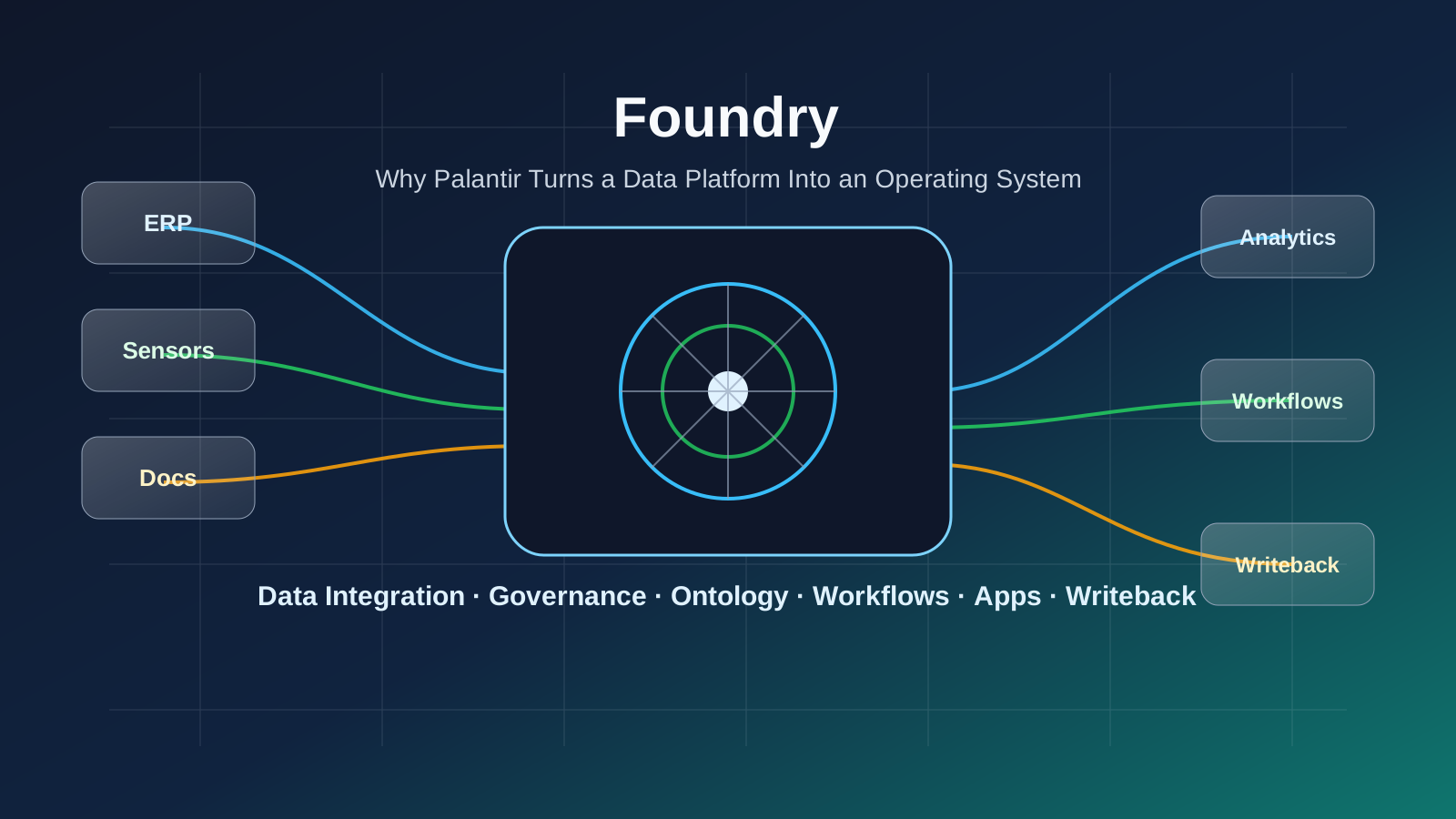
- Connect fragmented systems and data sources.
- Clean, govern, and trace data lineage.
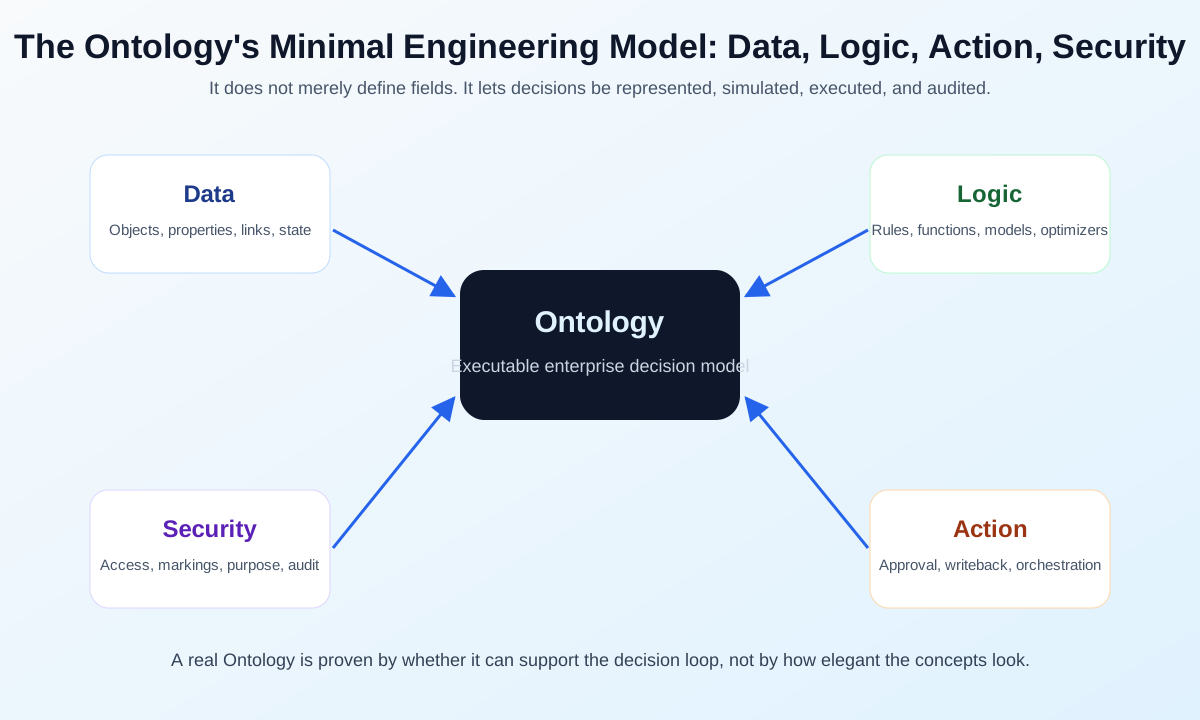
- Model business objects and links through the Ontology.
- Attach rules, models, functions, and optimization logic.
- Build applications and workflows for frontline work.
- Execute governed actions and feed results back.
That is heavier than building a dashboard, but it is also closer to an operating system.
Manufacturing: From Scheduling Dashboards to Operational Adjustment
Manufacturing is full of fragmented systems.
ERP manages orders. MES manages work orders. WMS manages inventory. Quality systems track defects. Equipment systems track production state. Supplier systems track delivery.
The business question is usually: what does a change affect?
If a critical material is short, which work orders, customer orders, and delivery commitments are affected? What alternatives exist?
Palantir’s value is not only aggregating those datasets. It is putting factories, lines, machines, work orders, materials, suppliers, and orders into one Ontology.
Once relationships exist, the system can support impact analysis, simulation, scheduling changes, and writeback.
That is the difference between manufacturing visibility and manufacturing operations.
Healthcare: Coordinating Resources, Not Just Analyzing Data
Healthcare has complex data: medical records, staffing, beds, medication inventory, lab results, insurance, and payment systems.
But the key problem is not only data volume. It is resource coordination and responsibility boundaries.
If a ward is short on capacity, the system needs to understand patients, beds, staff, tests, medication, and surgery schedules.
A chatbot cannot safely handle that by itself.
It must know not only what information exists, but who can see it, who can change it, and who must confirm decisions.
The Ontology’s value is modeling patient pathways, resource state, and permissions so applications and agents can assist coordination instead of generating detached advice.
Energy: From Asset State to Risk Decisions
Energy is asset-heavy, field-heavy, and failure costs are high.
Sensor data, maintenance history, operating conditions, location, supply chain, and safety rules may all influence one decision.
If an asset looks abnormal, operators may need to choose between monitoring, derating, scheduling repair, or shutting down.
That is not solved by one prediction model.
A model can estimate failure probability. The real action also depends on capacity impact, safety constraints, spare parts, repair crews, customer supply, and regulatory requirements.
Palantir’s pattern is to put these factors into one object and workflow system so decisions are explainable, actions can be approved, and results feed back.
Defense: Complexity Comes From Constraints
Defense is often discussed through political labels.
From a software engineering perspective, the complexity is largely operational constraint:
- Networks may be isolated.
- Permissions are strict.
- Data sources are diverse.
- Field conditions are unstable.
- Decisions affect real action.
- Audit and accountability matter.
Ordinary SaaS does not easily fit these environments.
The platform must run in complex deployment settings, handle fine-grained permissions, integrate multiple sources into mission objects, and let teams make decisions from shared operational context.
This helps explain why Palantir talks about Gotham, Foundry, AIP, Apollo, and security governance together.
The Common Thread
The industries differ, but the structure is similar:
- Build shared business objects.
- Model dependencies between them.
- Attach rules and models.
- Build frontline workflows.
- Initiate actions under permission constraints.
- Track results and feedback.
This is not just selling vertical templates.
It is using one platform to model different organizations’ operational reality.
Closing Thought
Do not ask only which customers Palantir serves.
Ask:
Where is the operational complexity? Which objects must be modeled? Which actions must be governed? Which feedback must return to the system?
Manufacturing, healthcare, energy, and defense share one core trait: operations are complex.
In one sentence:
The value in Palantir’s use cases is not the customer list. It is whether the platform can turn complex operations into an executable model.