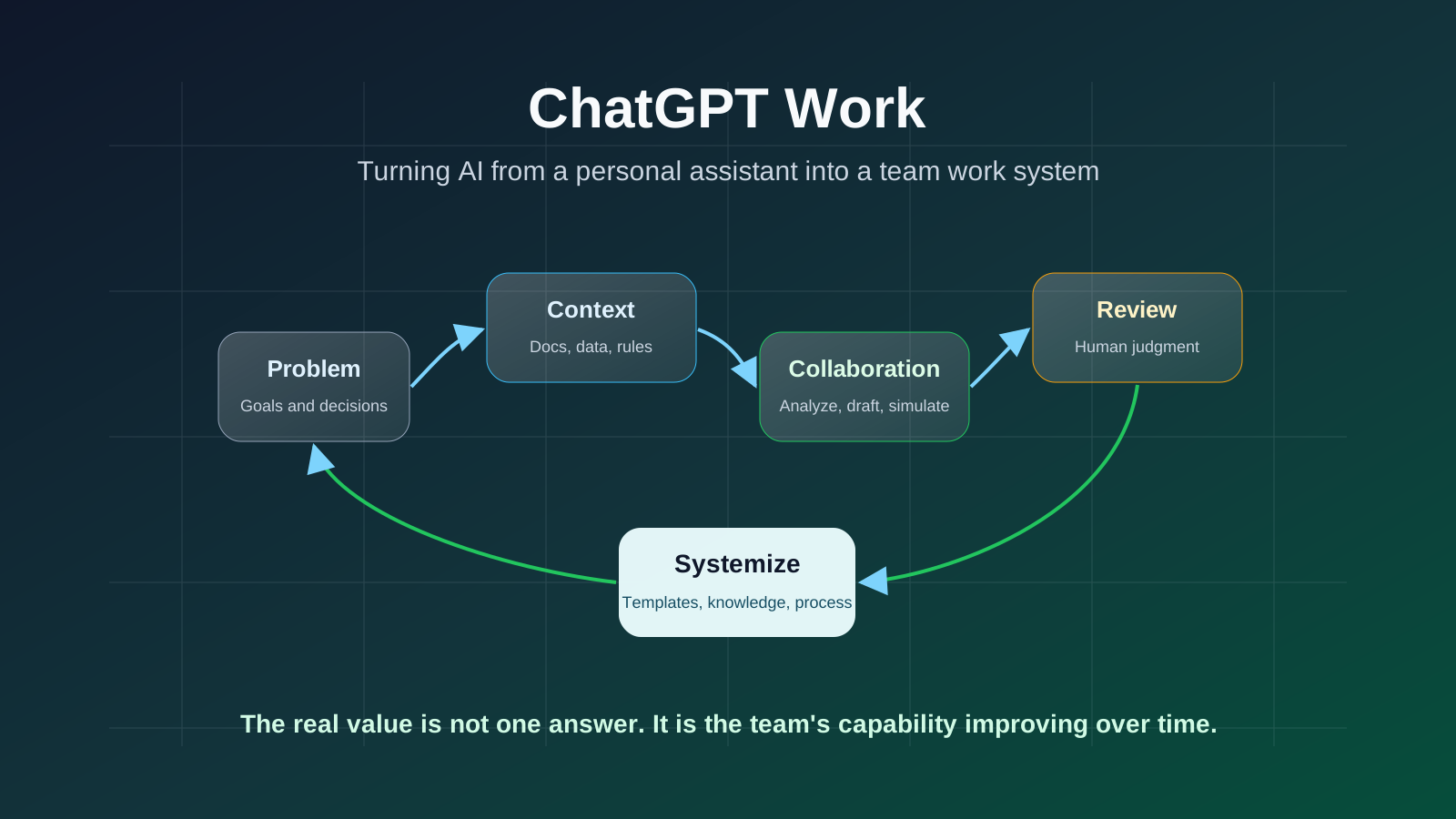
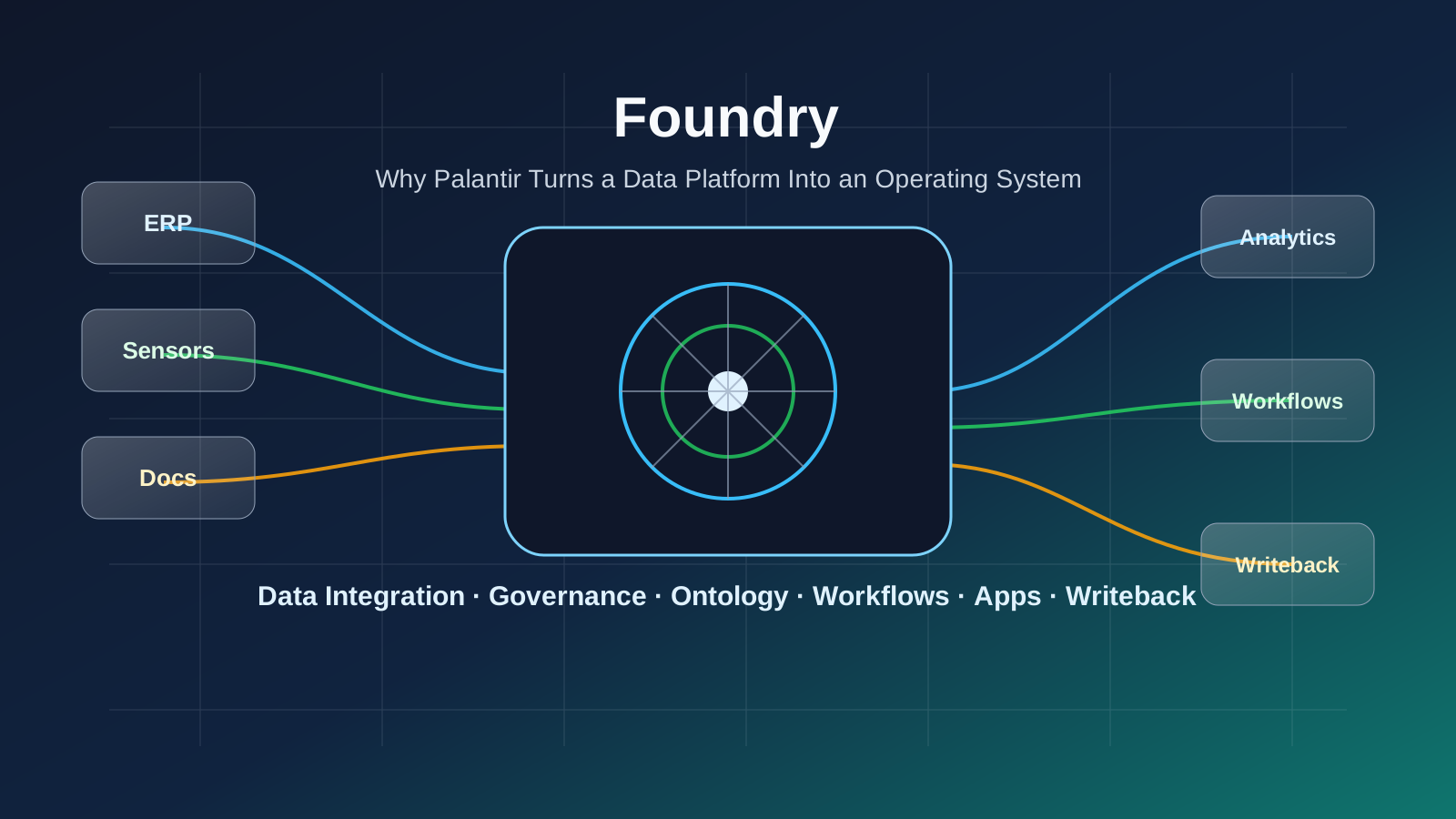
Palantir's Ontology is not a traditional semantic layer and not just a nicer set of business names on top of tables. It puts objects, relationships, actions, logic, and permissions into one executable model shared by humans, applications, and AI agents.
系列:Palantir Series 3 / 8
- 1 Palantir for Beginners: What Kind of Software Company Is It?
- 2 Foundry: Why Palantir Turns a Data Platform Into an Operating System
- 3 Ontology: Why It Is the Core of Palantir 当前
- 4 AIP: Why Enterprise Agents Cannot Be Just Chatbots
- 5 Apollo: Why Continuous Delivery Is a Palantir Advantage
- 6 Use Cases: How Palantir Lands in Manufacturing, Healthcare, Energy, and Defense
- 7 Business Model: Why Palantir Does Not Look Like Traditional SaaS
- 8 Controversies: Privacy, Government Contracts, Military Use, and Governance Boundaries
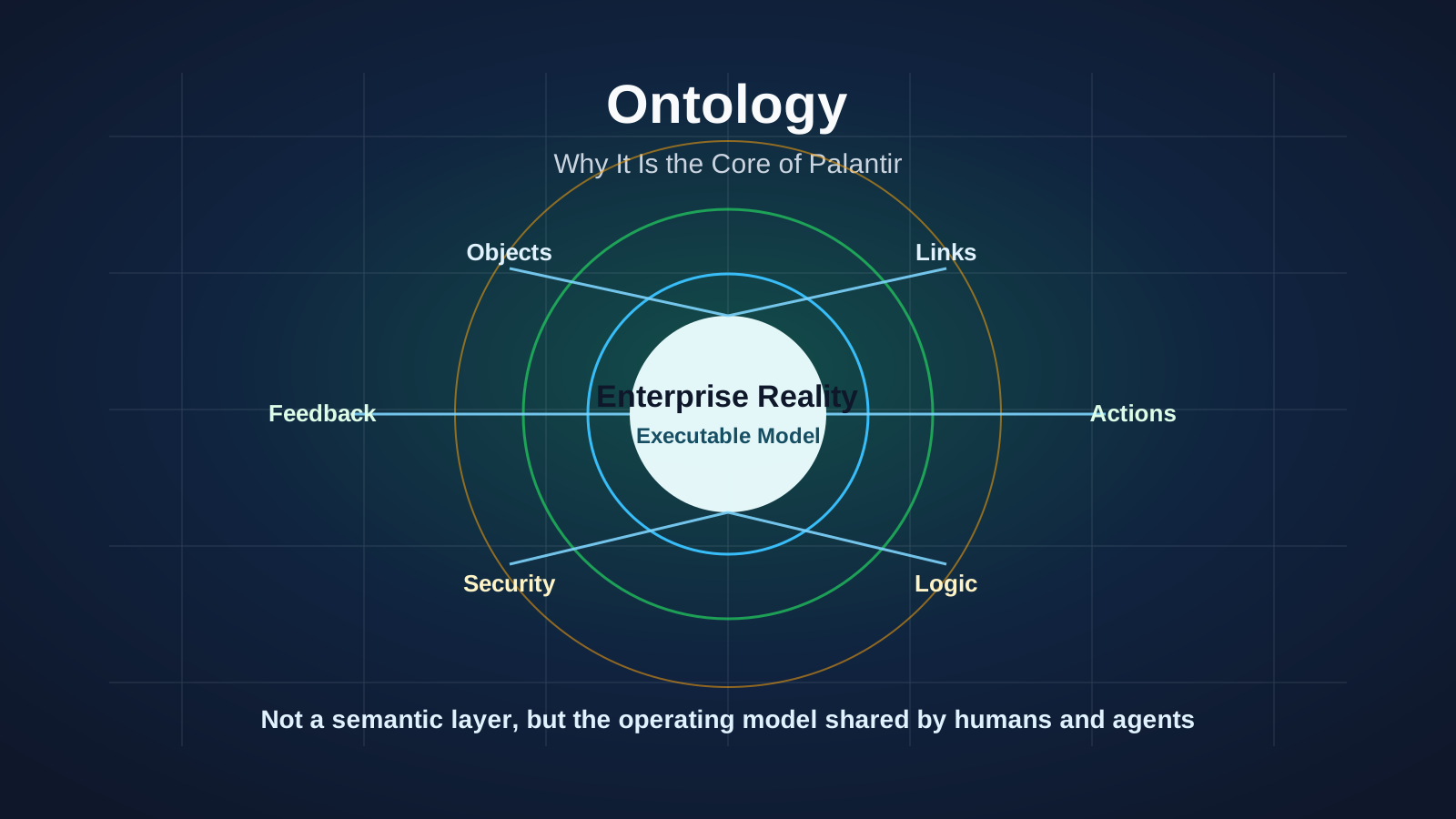
If Foundry is Palantir’s data operations foundation, the Ontology is the core business model built on top of it.
When people first see the word Ontology, they often translate it into “knowledge graph,” “semantic layer,” or “business object model.” Each of those is partly useful. None of them is enough.
From an engineering perspective, Palantir’s Ontology is closer to this:
It puts enterprise objects, relationships, logic, actions, and permissions into one executable model so humans, applications, and AI agents can collaborate around the same operational world.
That is the key to understanding Palantir.
Why Enterprises Need an Ontology
The problem in large organizations is not a lack of data.
Usually, the opposite is true. There is too much data:
- ERP has orders, inventory, and purchasing.
- CRM has customers, contracts, and opportunities.
- MES has work orders, production lines, and machine state.
- WMS has warehouses, locations, inbound and outbound movement.
- Finance systems have cost, revenue collection, and budget.
- Documents and emails hold unstructured business judgment.
Each system represents part of reality. None of them is the enterprise’s reality.
The questions operators care about often cross many systems:
- If a supplier is late, which customer orders are affected?
- If a production line fails, which delivery commitments are at risk?
- If hospital capacity is tight, which patient pathways should change first?
- If an energy asset is abnormal, should we repair, derate, or monitor?
These are not single-table queries.
They are decision problems involving object relationships, business rules, permission boundaries, and possible actions.
The reason an Ontology exists is to make those decision problems explicit.
Ontology Is Not a Traditional Semantic Layer
Many data platforms talk about a semantic layer.
A semantic layer usually answers: how should metrics and fields be interpreted?
For example:
- Is “revenue” based on order date or recognized revenue date?
- What is the definition of an active user?
- Does available inventory subtract already allocated inventory?
- Can different departments use the same metric name consistently?
These questions matter.
But Palantir’s Ontology is closer to the operational layer:
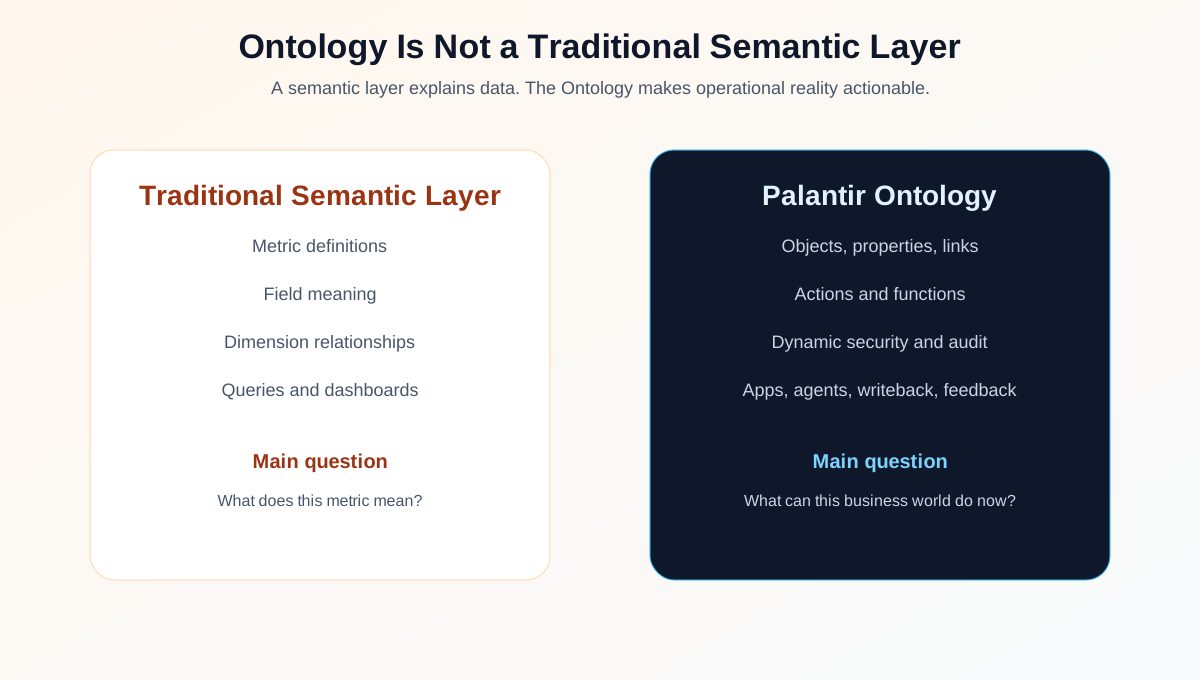
A traditional semantic layer mainly asks:
What does this metric mean?
The Ontology goes further:
What is the current state of this business world? Which objects affect each other? What actions are available? Who can execute them? How does the result feed back?
So the Ontology should not be treated as a metric dictionary or a data model.
It is an operating model.
Two Sides of the Ontology: Semantic and Kinetic
Palantir’s documentation describes the Ontology as having two categories of elements:
- Semantic elements: objects, properties, and links.
- Kinetic elements: actions, functions, and dynamic security.
This distinction matters.
Many systems stop at the first half: they model the world as objects and relationships.
Palantir emphasizes the second half: the model also needs to be callable, actionable, and permission-aware.
You can think of it through four engineering dimensions:
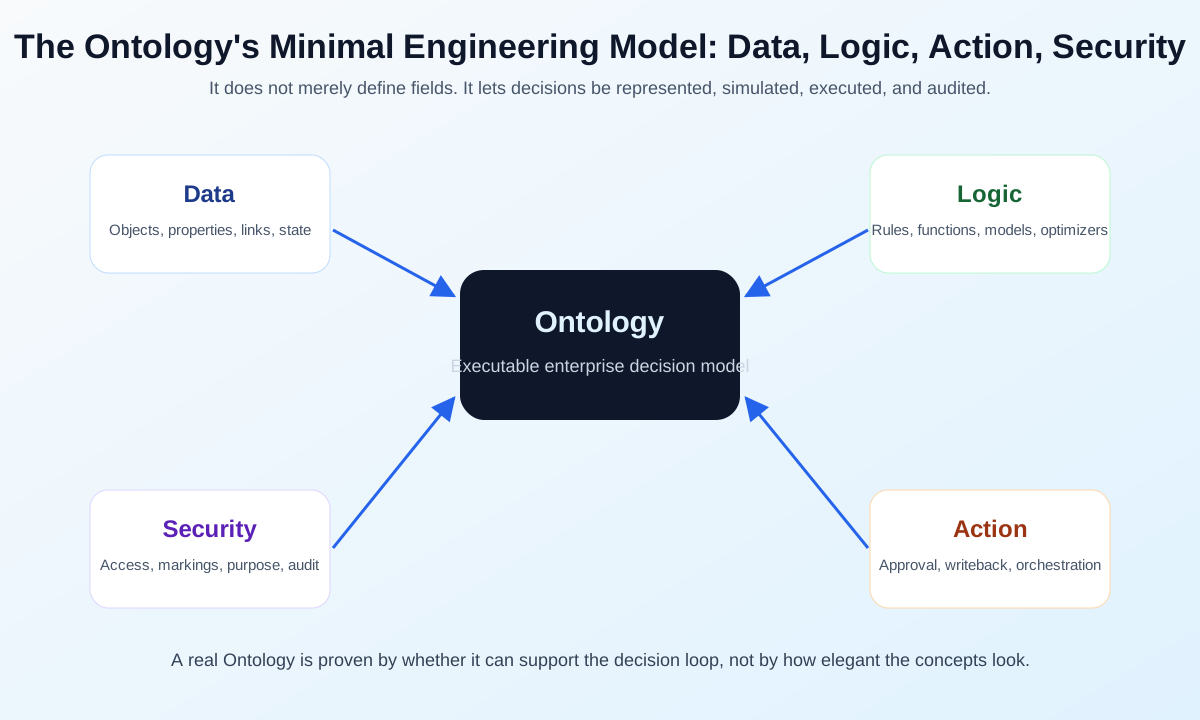
Data: Objects, Properties, Links, State
The first layer is business objects.
Objects are not database tables. They are entities in the operational world:
- Orders.
- Customers.
- Suppliers.
- Machines.
- Work orders.
- Flights.
- Hospital beds.
- Vehicles.
- Missions.
Each object has properties and state.
An order may have value, due date, customer, priority, and fulfillment status.
Objects are connected by links: an order depends on a material, a material comes from a supplier, a work order consumes production capacity, a machine belongs to a factory.
The goal is to stop forcing systems to speak only in tables and fields, and let them speak in the entities operators actually understand.
Logic: Rules, Functions, Models, Optimizers
Objects alone are not enough.
Enterprise operations contain a lot of logic:
- Which customers should be protected first?
- Which materials are valid substitutes?
- Which constraints cannot be violated?
- Which plan has the lowest cost?
- Which plan has the lowest risk?
- When is human approval required?
This logic can come from code, functions, models, rules engines, or optimizers.
The value of the Ontology is that it connects this logic to business objects.
Instead of writing an isolated inventory forecast model, the model can run around materials, work orders, orders, and customers, then return results into the same object world.
Action: From Recommendation to Execution
This is the fundamental boundary between an Ontology and a normal data model.
A traditional data model is usually read-only.
It tells you what happened.
The Ontology also describes what can be done:
- Reschedule production.
- Create a purchase order.
- Change a delivery route.
- Escalate an alert.
- Trigger approval.
- Assign a task.
- Write back to an external system.
Actions do not mean uncontrolled automation.
Mature action design must define boundaries: who can initiate, under what conditions, whether approval is required, how execution is recorded, and how failures are handled.
But once actions become part of the model, the system moves from explaining operations to participating in operations.
Security: Permission Is Not an Outer Filter
In many enterprise systems, permissions are treated as a filter around the UI or API.
In Palantir’s Ontology, security is part of the model.
The same object, action, and field may have different access and execution rules depending on role, purpose, data marking, and workflow state.
For example:
- Sales may see customer orders but not cost.
- Production may see work orders but not change customer priority.
- An AI agent may read aggregate results but not sensitive details.
- Some actions must always require human confirmation.
If security is not part of the Ontology, AI agents cannot work safely.
They may know what should be done, but not what they are allowed to do.
An Engineering Example: Not an Order Table, but an Order Object
Suppose there is an order table.
A traditional data platform cares about:
- Schema.
- Field types.
- Metric definitions.
- Data quality.
- Query performance.
All of that matters.
The Ontology goes further:
- What properties does the order object have?
- How is it related to customers, products, materials, work orders, and routes?
- Which rules determine its priority?
- Which models predict delay risk?
- Which actions can change its state?
- Who can approve those actions?
- How do execution results feed back into the order object?
Now the order is no longer a row in a report. It is a business object the system can understand and operate on.
That is the engineering meaning of Ontology.
Why Ontology Is a Prerequisite for AI Agents
Many enterprises now want AI agents.
Without an Ontology, agents usually remain at three shallow capabilities:
- Question answering.
- Summarization.
- Recommendation generation.
These are useful, but still far from real operations.
A real enterprise agent needs to know:
- What business objects exist right now?
- How are those objects connected?
- Which states are current?
- Which rules must be obeyed?
- Which functions can it call?
- Which actions can it initiate?
- Which actions must be confirmed by a human?
- How should execution be logged and tracked?
The Ontology gives the agent an operational business world, not just a pile of documents.
This is why Palantir ties AIP closely to the Ontology.
AIP brings large language models into enterprise workflows. The Ontology tells the model what the enterprise world looks like, where the boundaries are, and what can be done.
Without an Ontology, AIP can easily become a chatbot-shaped search box.
With an Ontology, AIP can become a governed operational assistant.
Why Ontology Is Hard
Ontology sounds elegant, but it is not finished by drawing an entity relationship diagram.
The hard parts are practical.
First, business objects change.
Processes change, organizations change, permissions change, and systems change. The Ontology must evolve with the business, or it becomes a centralized model that nobody wants to touch.
Second, different departments understand the same object differently.
A customer from sales, finance, and delivery perspectives may not be identical. The Ontology must handle those differences instead of pretending the whole company naturally shares one language.
Third, actions are more sensitive than data.
A wrong query may cause a bad analysis.
A wrong action may affect orders, production lines, patients, equipment, safety, or money.
That means action design must be careful: boundaries, approval, audit, and rollback need to be considered up front.
Fourth, AI amplifies model quality problems.
When the Ontology is used only by humans, people fill gaps with context and judgment.
When the Ontology is used by agents, missing objects, wrong links, and unclear permission boundaries directly shape agent behavior.
This is why Ontology is not low-code configuration work. It is serious software engineering.
How to Judge Whether an Ontology Is Good
Do not look only at the number of objects.
More objects do not automatically mean a better Ontology.
Better questions are:
- Can business users describe problems in object language?
- Do object links support real impact analysis?
- Do permissions work with objects, fields, and actions?
- Can business logic be reused around objects?
- Are applications built directly on the Ontology?
- Are actions approvable, auditable, and traceable?
- Can agents safely complete tasks through the Ontology?
A good Ontology eventually lets business and engineering teams discuss problems using the same object language.
That is difficult, but that is where the value is.
One of the hidden costs of enterprise software is that different systems, teams, and workflows do not share the same business reality.
Closing Thought
Ontology is not Palantir’s core because the word sounds abstract.
It is core because Palantir is not trying to build only dashboards or a data warehouse. It is trying to build an enterprise operating system.
An enterprise operating system needs a model of reality.
That model must express objects, relationships, state, logic, actions, permissions, and feedback.
That is the Ontology.
In one sentence:
The Ontology is Palantir’s core abstraction for turning enterprise reality into executable software.
Once you understand the Ontology, it becomes easier to understand why Foundry is more than a data platform, why AIP is more than a chatbot, and why Palantir keeps talking about data, applications, permissions, actions, and AI together.