Palantir is hard to classify as ordinary SaaS or consulting. Its model combines a reusable platform, Forward Deployed Engineering, and customer-specific operational outcomes.
系列:Palantir Series 7 / 8
- 1 Palantir for Beginners: What Kind of Software Company Is It?
- 2 Foundry: Why Palantir Turns a Data Platform Into an Operating System
- 3 Ontology: Why It Is the Core of Palantir
- 4 AIP: Why Enterprise Agents Cannot Be Just Chatbots
- 5 Apollo: Why Continuous Delivery Is a Palantir Advantage
- 6 Use Cases: How Palantir Lands in Manufacturing, Healthcare, Energy, and Defense
- 7 Business Model: Why Palantir Does Not Look Like Traditional SaaS 当前
- 8 Controversies: Privacy, Government Contracts, Military Use, and Governance Boundaries
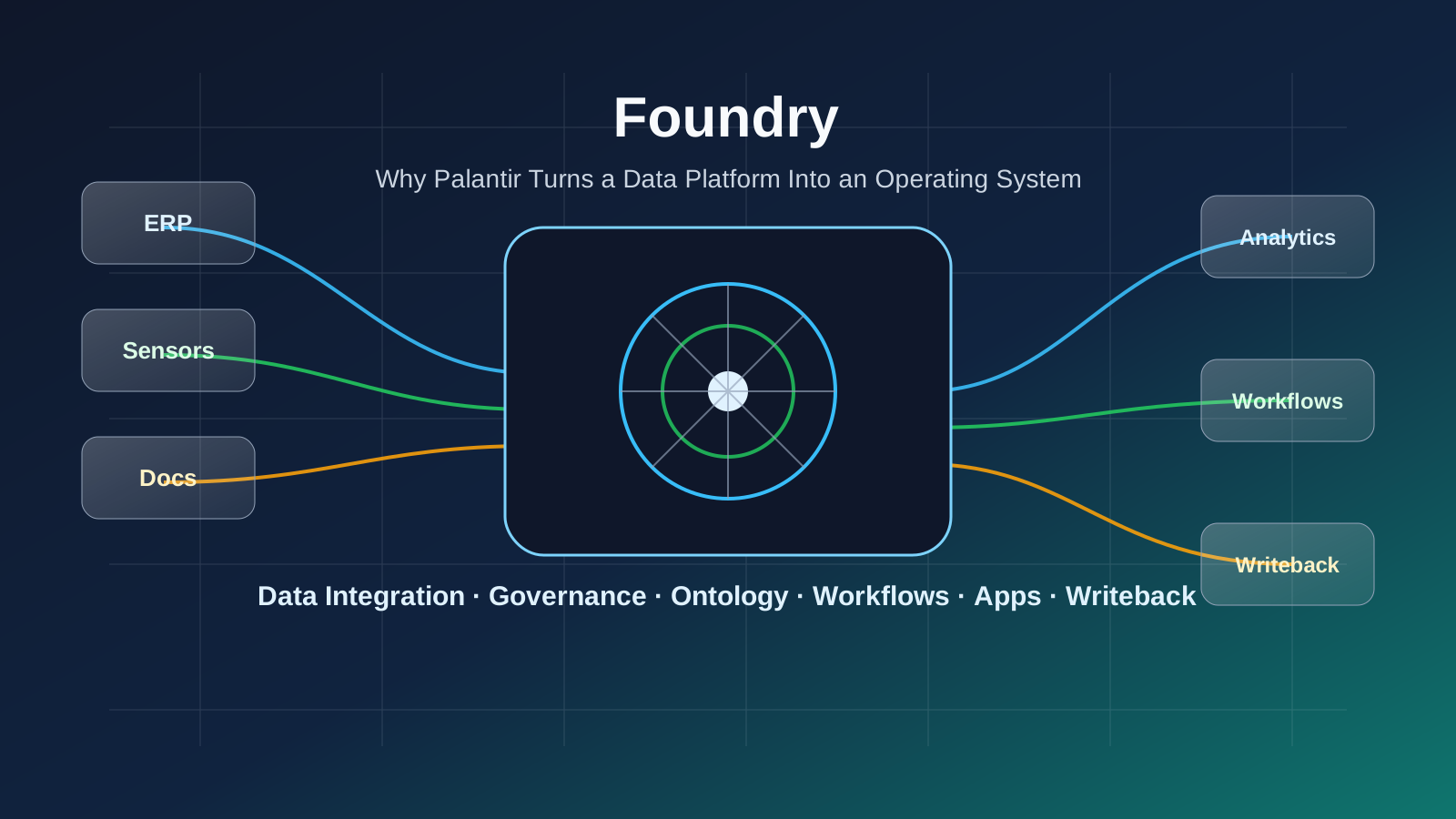
Palantir is difficult to understand through the usual SaaS lens.
If you treat it as standard SaaS, it looks too heavy, too customized, and too dependent on long sales cycles.
If you treat it as consulting, you underestimate the platform and software reuse.
A better framing is:
Palantir uses a reusable platform to build highly tailored operating systems, then uses Forward Deployed Engineering to push that platform into real customer problems.
The Logic of Traditional SaaS
Standard SaaS usually optimizes for:
- Standardized product workflows.
- Lightweight customer configuration.
- Uniform deployment environments.
- Low marginal delivery cost.
- High self-service adoption.
That works well for relatively common workflows such as CRM, project management, finance, HR, and customer support.
But many Palantir use cases are not standard.
An energy company’s asset operations, a hospital’s resource coordination, a manufacturer’s supply chain, or a government mission system may involve legacy systems, permission constraints, field workflows, and organizational differences.
Those problems are hard to solve with fixed forms.
The Logic of Consulting
Consulting and outsourcing can handle customization.
The weakness is reuse.
Each customer becomes a project. Each project becomes a custom codebase. Each system creates another set of integrations. Maintenance cost grows over time.
That does not create a strong software platform effect.
Palantir is not trying to be pure outsourcing.
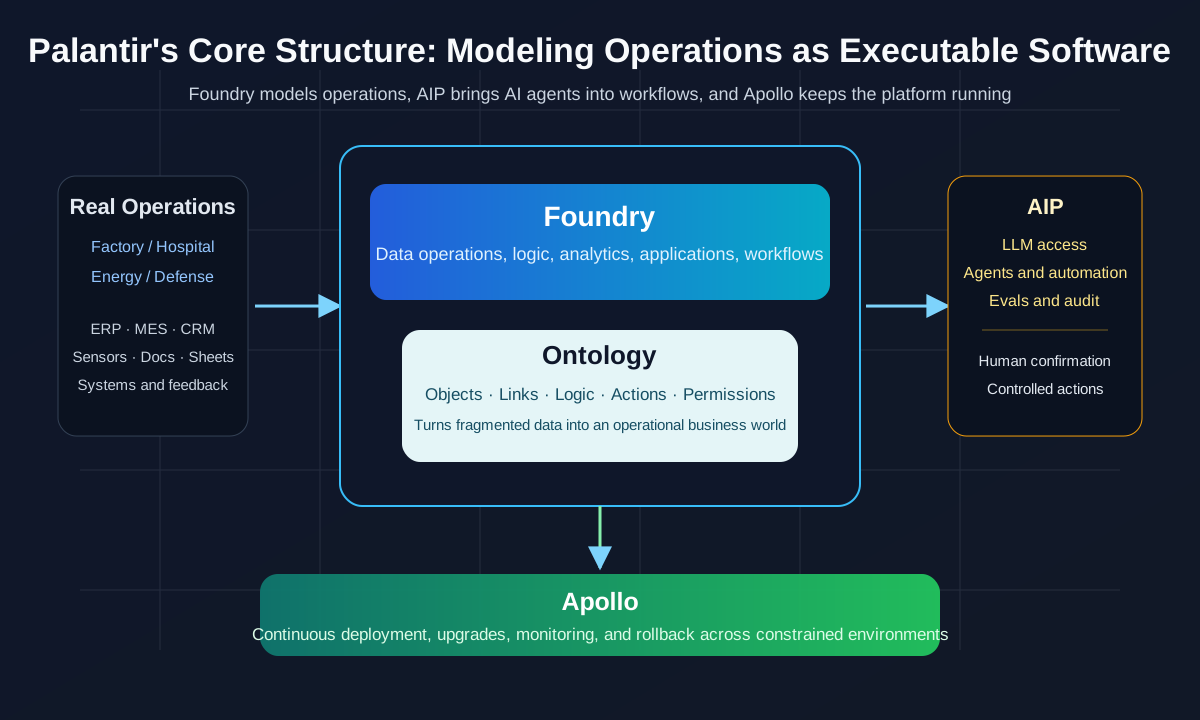
Its base is Foundry, Ontology, AIP, Apollo, and related platform capabilities. FDEs do not start from a blank file. They compose platform capabilities around customer problems.
So Palantir sits between the two:
- More customer-specific than standard SaaS.
- More platform-based than ordinary consulting.
FDE Is Part of the Business Model
A Forward Deployed Engineer is not a normal pre-sales engineer or implementation consultant.
Palantir’s own blog describes FDSEs as engineers who embed directly with customers and configure Palantir’s existing software platforms to solve difficult problems.
That explains why Palantir does not feel like traditional SaaS.
It does not simply sell accounts and leave customers to configure everything. It sends engineering capacity into the field to translate operational problems into platform objects, pipelines, Ontology, workflows, and applications.
The role has three jobs:
- Understand the customer’s real operational problem.
- Compose a usable system quickly from platform capabilities.
- Bring field feedback back into product and architecture.
FDE lets Palantir handle non-standard problems.
It also makes delivery heavier.
That is the business model tension.
How Platform and Customization Coexist
The key question is whether customization can be absorbed into the platform.
If every customer need becomes a one-off project, scale fails.
If the platform is too standardized, it cannot enter complex operational environments.
Palantir’s approach is to put common capabilities in the platform:
- Data integration.
- Permissions and governance.
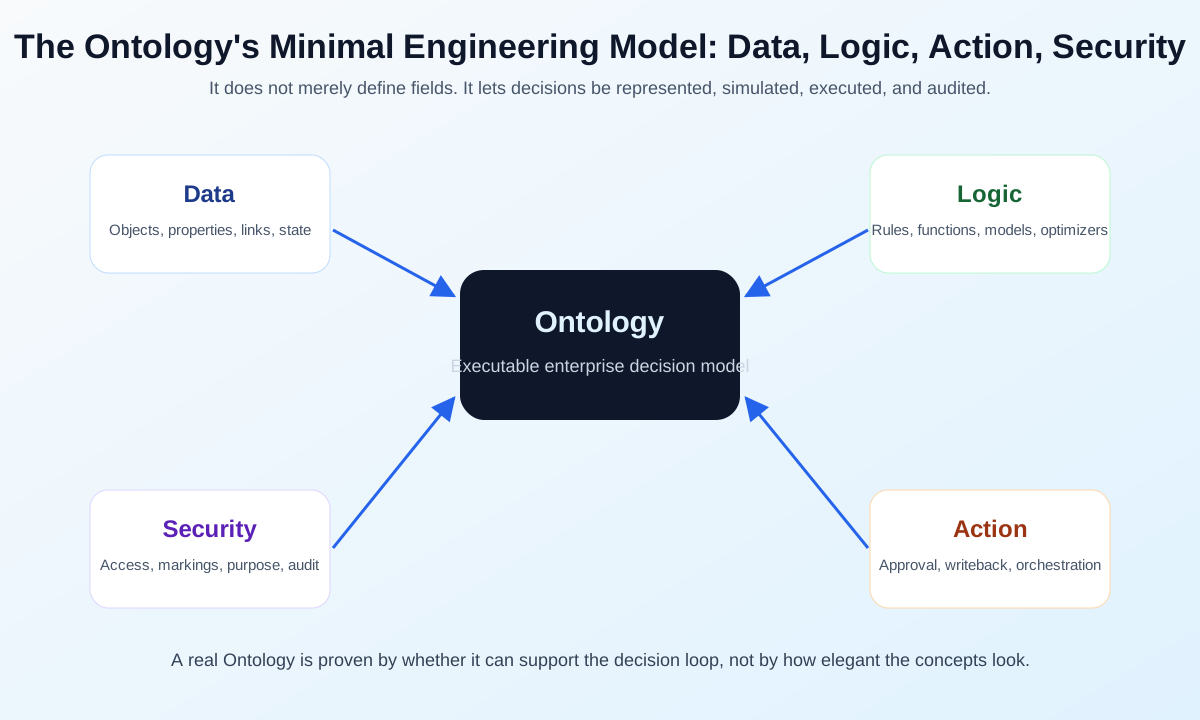
- Ontology.
- Workflow construction.
- AI agents.
- Continuous delivery.
Then customer-specific systems are composed from those capabilities.
This is why Palantir looks less like a single tool and more like a development and runtime environment.
Strengths of the Model
First, it can enter high-value complex problems.
Many core enterprise problems are not covered well by standard SaaS. Palantir’s platform plus FDE model can reach them.
Second, it is tied to operational outcomes.
The product is not just a tool. It is often deployed around a goal: reducing inventory risk, improving production efficiency, coordinating healthcare resources, or improving mission context.
Third, it creates deep embedding.
Once Ontology, workflows, permissions, and writeback become part of customer operations, replacement cost rises.
Risks of the Model
The model also has risks.
First, delivery is heavy.
FDE requires high-quality engineering talent and does not scale like pure self-service SaaS.
Second, sales cycles may be long.
Important customer problems often have complex buying processes.
Third, boundaries can blur.
Customers may treat Palantir as an unlimited customization team, while the company may be pulled too far by project-specific demand.
Fourth, valuation is hard.
It does not fit cleanly into pure SaaS metrics or consulting revenue models.
Closing Thought
Palantir does not look unlike traditional SaaS because it has failed to standardize.
It looks different because the battlefield is different.
It targets operating-system problems inside complex organizations.
Those problems require both platform and field engineering.
In one sentence:
Palantir’s business model is to use a reusable platform and FDE to turn complex organizational operations into software.