Apollo is easy to overlook, but it explains how Palantir can run Foundry and AIP across cloud, on-premise, edge, government, and other constrained environments.
系列:Palantir Series 5 / 8
- 1 Palantir for Beginners: What Kind of Software Company Is It?
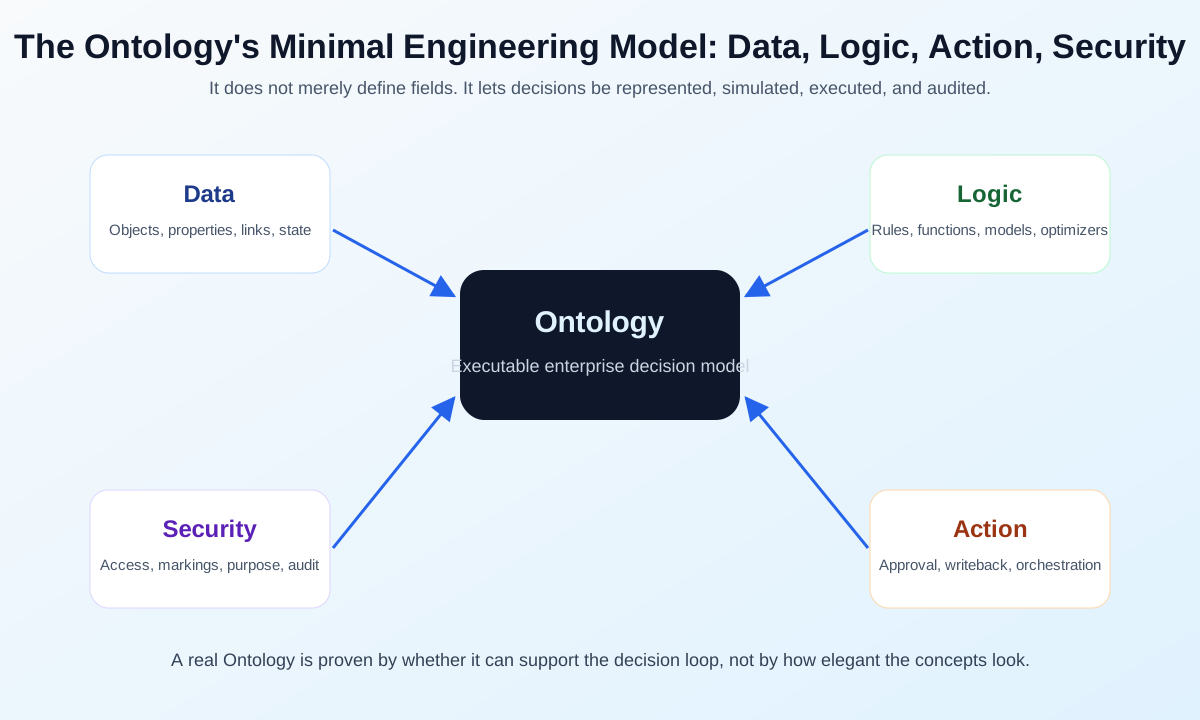
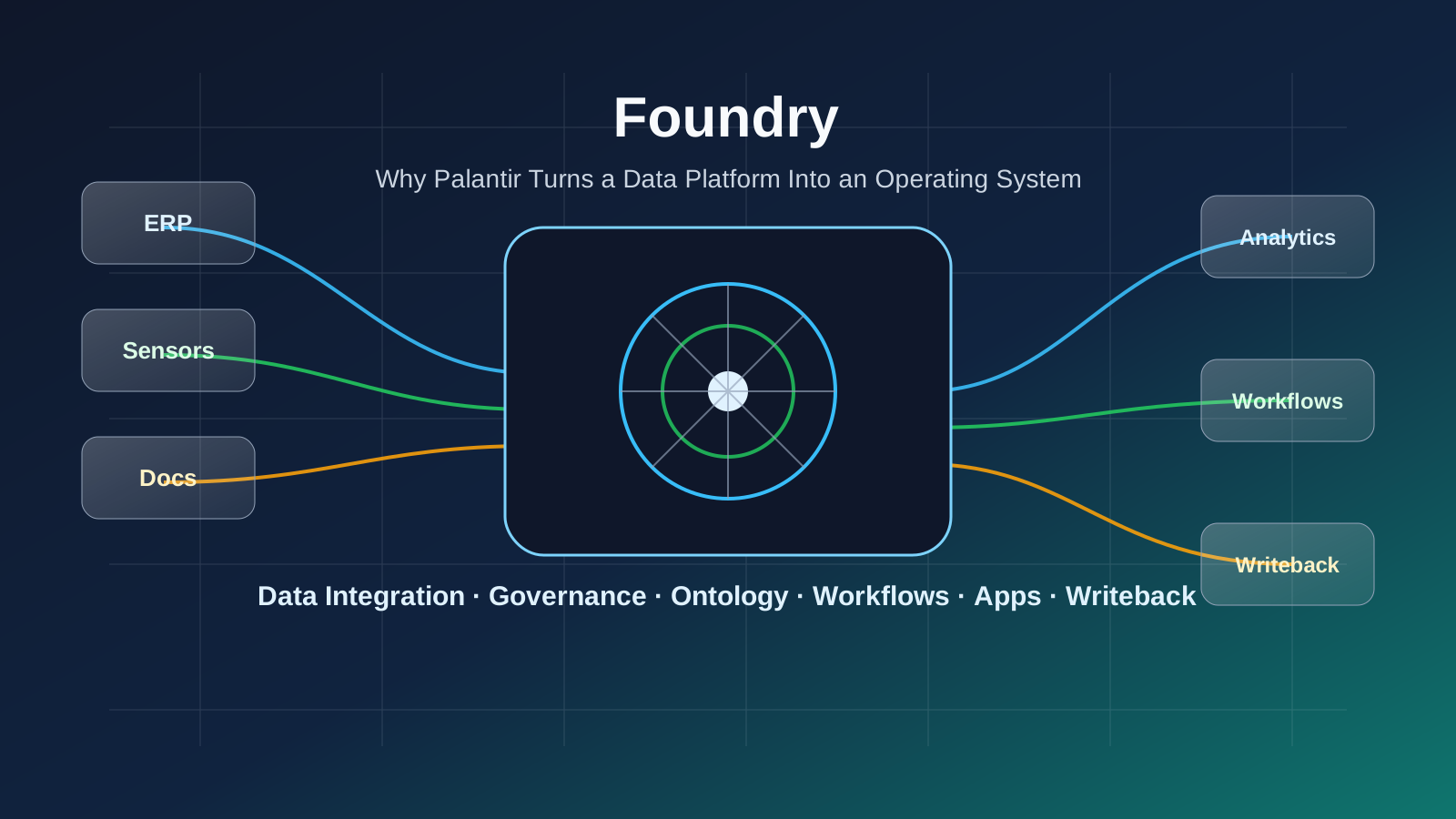
- 2 Foundry: Why Palantir Turns a Data Platform Into an Operating System
- 3 Ontology: Why It Is the Core of Palantir
- 4 AIP: Why Enterprise Agents Cannot Be Just Chatbots
- 5 Apollo: Why Continuous Delivery Is a Palantir Advantage 当前
- 6 Use Cases: How Palantir Lands in Manufacturing, Healthcare, Energy, and Defense
- 7 Business Model: Why Palantir Does Not Look Like Traditional SaaS
- 8 Controversies: Privacy, Government Contracts, Military Use, and Governance Boundaries
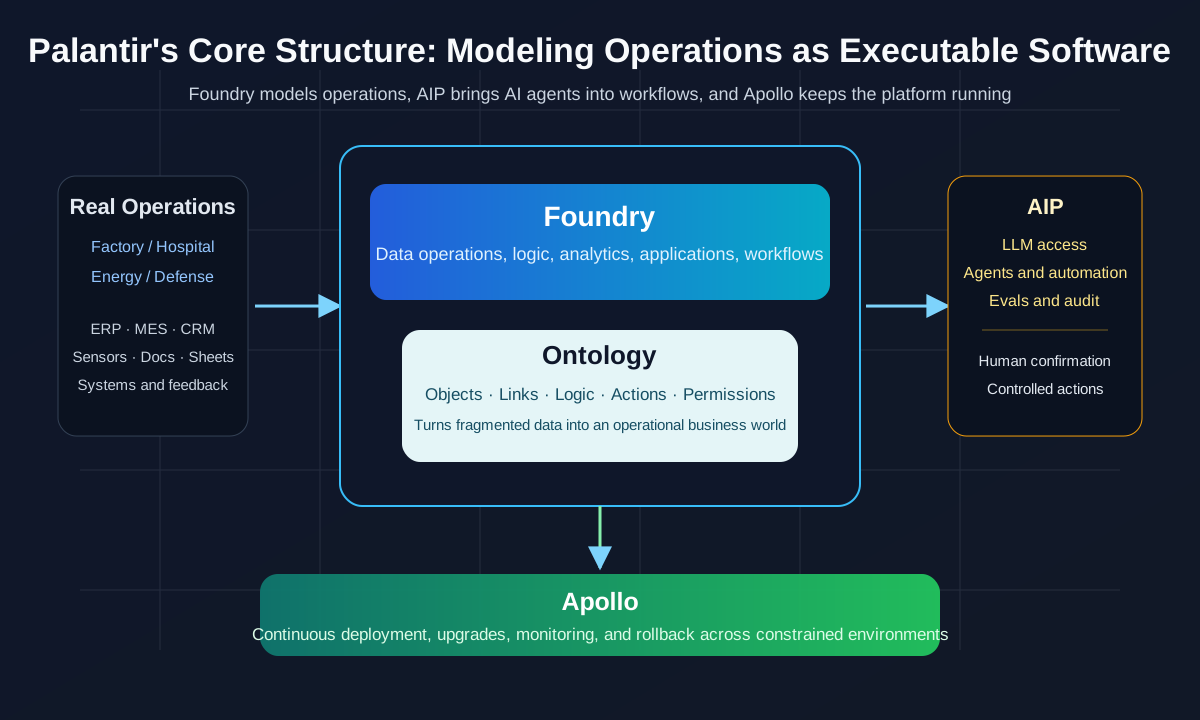
When people discuss Palantir, they usually focus on Foundry, Ontology, and AIP.
Apollo is easier to miss.
From an engineering perspective, Apollo is one of Palantir’s most important foundations. Palantir’s customers often do not run in a clean SaaS environment. They may operate across cloud, on-premise infrastructure, edge environments, government networks, classified networks, hospitals, factories, and energy sites.
In those environments, the hard question is not only whether software can be built.
The hard question is:
Can it be continuously deployed, upgraded, monitored, rolled back, and kept reliable under operational constraints?
That is Apollo’s role.
Why Palantir Cannot Rely on Ordinary SaaS Deployment
The ideal SaaS world is simple: all customers run on one cloud platform, versions are unified, networks are reachable, infrastructure is controlled, and upgrades are standardized.
Palantir does not live only in that world.
Customers may require software to run:
- In public cloud.
- In private cloud.
- In on-premise data centers.
- On edge systems.
- In isolated networks.
- In government or classified environments.
- Under unreliable connectivity and limited access.
In these cases, continuous delivery is not a small CI/CD detail. It determines whether the product can be delivered at scale.
If every customer environment requires manual deployment, manual upgrades, and manual troubleshooting, Palantir’s platform model cannot scale.
Apollo Solves Runtime Complexity
Palantir describes Apollo as the continuous delivery platform that manages the infrastructure hosting Foundry and AIP services and orchestrates large numbers of zero-downtime upgrades.
That has several implications.
First, Apollo is not merely releasing a single application.
It manages a platform of services.
Second, Apollo does not assume one uniform environment.
It has to handle different clouds, networks, security levels, and customer infrastructure.
Third, Apollo is not about one successful deployment.
It is about continuous, observable, rollback-capable operation.
That is a harder problem than the deployment system behind a typical internet application.
Why This Becomes a Platform Advantage
Palantir’s visible product value comes from Foundry and AIP. But those capabilities must run reliably in customer environments.
If deployment is unstable, the Ontology does not matter.
If upgrades are slow, AIP capabilities cannot reach customers quickly.
If rollback is hard, constrained customers will not trust the platform in critical workflows.
If every environment is too different, product teams get buried in infrastructure exceptions.
Apollo platformizes this complexity:
- Product capabilities can be pushed across environments.
- Customer environments can upgrade in risk-managed phases.
- Runtime status can be observed.
- Failures can be diagnosed and rolled back.
- Constrained networks can be part of the delivery system.
This directly affects delivery speed and customer stickiness.
Apollo and AIP
AIP looks like models, agents, and automation.
But enterprise AI production depends heavily on runtime infrastructure.
Models change, tools change, evaluations change, agent workflows change, and permission policies change.
Those changes must be deployed reliably into customer environments.
Without Apollo-like capabilities, AIP can easily remain a demo or a limited pilot.
To let AI agents participate in real workflows over time, the platform needs continuous delivery, monitoring, and rollback.
Apollo is not a back-office system outside AIP.
It is an infrastructure condition for production AIP.
Apollo and Forward Deployed Engineering
Palantir’s Forward Deployed Engineering model puts engineers close to customer problems.
But if every customer requires manual assembly, the model becomes hard to scale.
Apollo turns repeated deployment, upgrade, environment management, and infrastructure operations into platform capabilities, so deployed engineers can spend more time on business models and outcomes.
In practical terms:
- FDEs identify what the customer actually needs.
- Foundry and AIP provide composable product capabilities.
- Apollo keeps those capabilities running reliably in customer environments.
Together, they form Palantir’s delivery system.
Closing Thought
Apollo is not the most visible part of a product demo.
But if you have operated enterprise software, its importance is obvious.
Complex organizations do not lack demos.
They lack systems that run for years, upgrade continuously, respect operational constraints, and remain debuggable when things fail.
Apollo addresses that foundation.
In one sentence:
Apollo is the continuous delivery base that turns Foundry and AIP from product capabilities into long-running platforms.