Palantir AIP is not mainly about connecting an LLM to enterprise data. It is about letting AI agents work inside a governed business world with context, permissions, auditability, and action boundaries.
系列:Palantir Series 4 / 8
- 1 Palantir for Beginners: What Kind of Software Company Is It?
- 2 Foundry: Why Palantir Turns a Data Platform Into an Operating System
- 3 Ontology: Why It Is the Core of Palantir
- 4 AIP: Why Enterprise Agents Cannot Be Just Chatbots 当前
- 5 Apollo: Why Continuous Delivery Is a Palantir Advantage
- 6 Use Cases: How Palantir Lands in Manufacturing, Healthcare, Energy, and Defense
- 7 Business Model: Why Palantir Does Not Look Like Traditional SaaS
- 8 Controversies: Privacy, Government Contracts, Military Use, and Governance Boundaries
When enterprises start building AI agents, the first version is often a chatbot.
It can answer policy questions, summarize documents, draft emails, and help write SQL. That is useful, but it is not yet enterprise operations.
The reason is simple: chatbots mostly handle text, while enterprise operations involve objects, relationships, permissions, actions, and accountability.
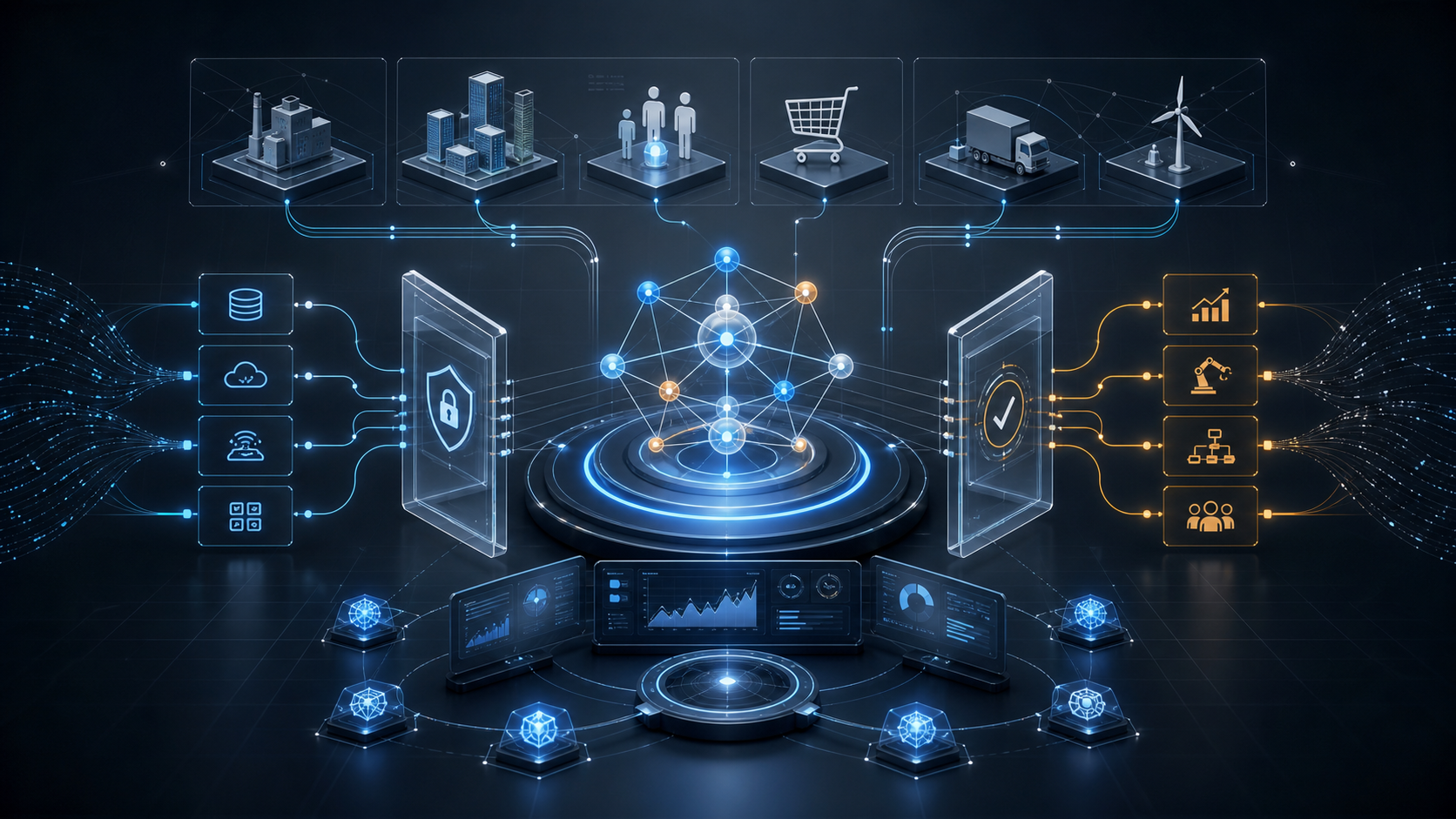
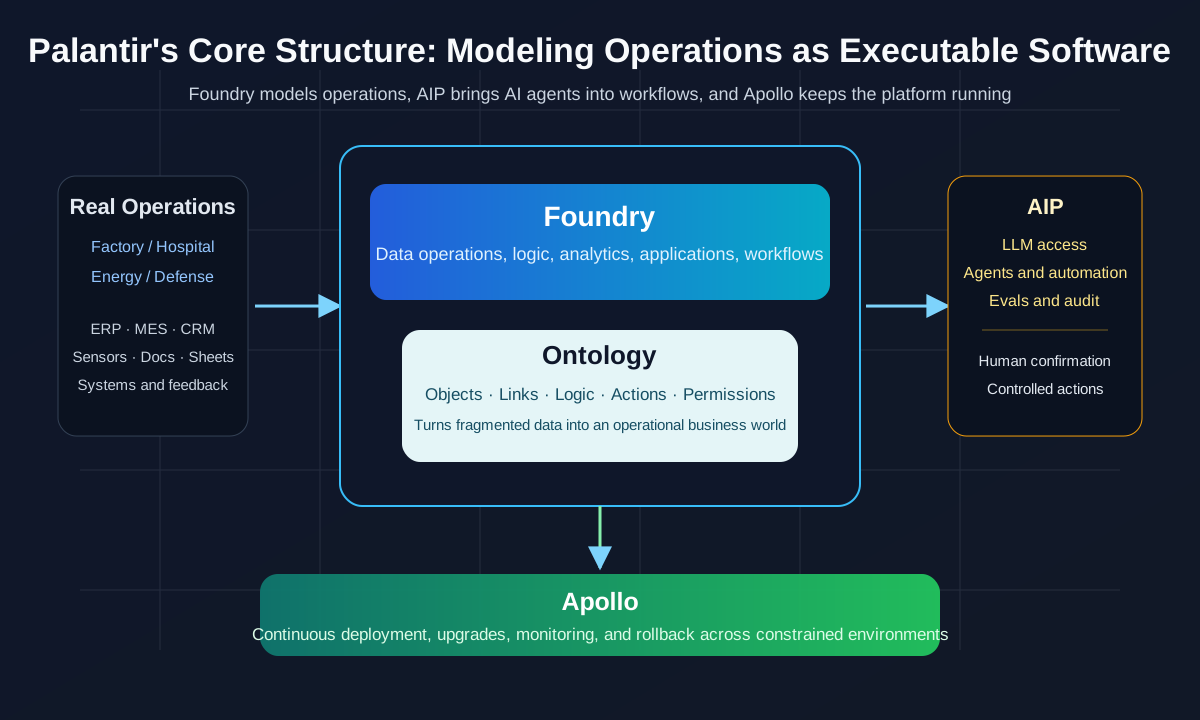
Palantir AIP is not mainly about plugging a model into company data. Its deeper role is to put large language models inside the business world created by Foundry and the Ontology, where agents can reason and act within governed boundaries.
The Limits of a Normal Enterprise Chatbot
A normal enterprise chatbot usually does three things:
- Search a knowledge base.
- Summarize documents.
- Generate recommendations.
Those capabilities improve knowledge work, but the boundary is obvious.
If a user asks, “The East China warehouse may be short next week. How should we adjust transfers?”
A chatbot can write plausible advice: protect priority customers, check alternative warehouses, contact suppliers, evaluate cost.
But it does not necessarily know:
- Which orders are actually affected.
- Which customers are priority customers.
- Which warehouses can transfer stock.
- Which materials can be substituted.
- Which actions require approval.
- Whether the current user can execute the action.
Without that context, an agent can advise like a consultant, but it cannot operate like a system.
AIP Addresses Production Agent Problems
The hard part in enterprise agents is not whether the model can speak. It is whether it can do work safely.
A production agent needs at least six conditions:
- Business context: current objects and state.
- Tool boundaries: callable functions and systems.
- Permission control: access and actions limited to what the user is allowed to do.
- Explainable path: decisions and tool use can be traced.
- Evaluation: behavior can be tested and monitored.
- Human confirmation: high-risk actions stay human-in-the-loop.
This is where AIP matters.
It treats the LLM not as a magical brain, but as one component inside a governable software architecture.
AIP Depends on the Ontology
Without the Ontology, AIP can easily become a chatbot-shaped search box.
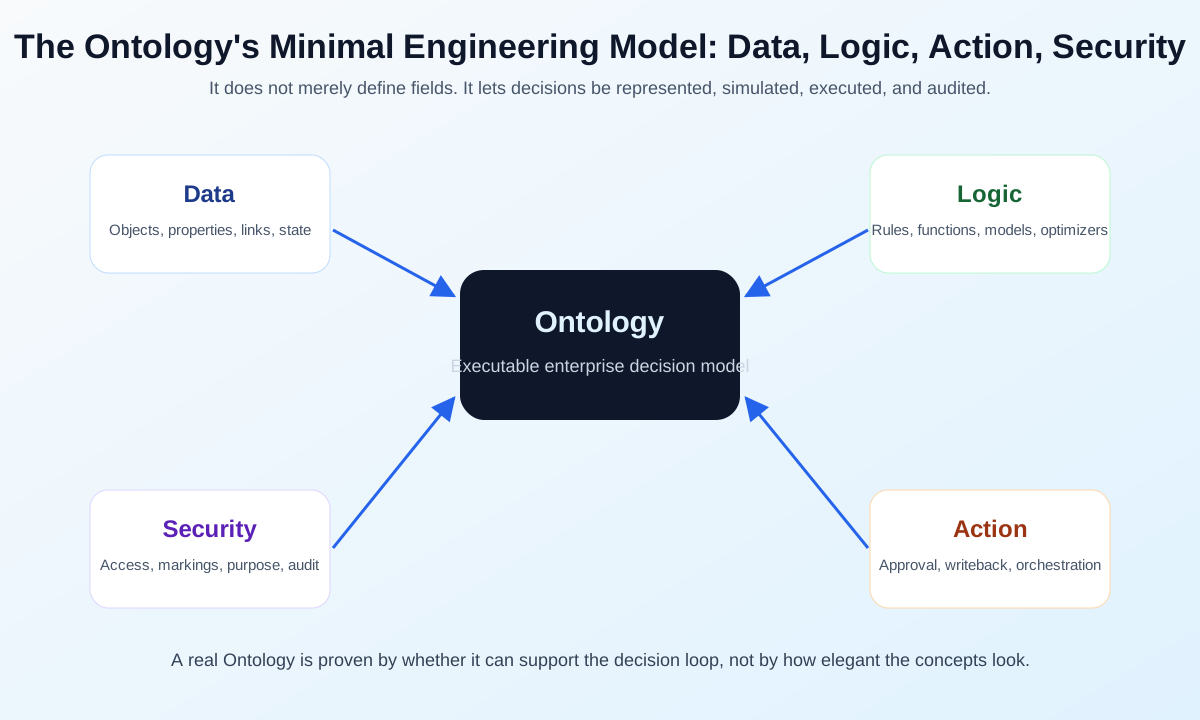
The Ontology gives AIP an enterprise operating world:
- Order objects.
- Customer objects.
- Machine objects.
- Work order objects.
- Links between objects.
- Callable functions.
- Available actions.
- Dynamic security and permission rules.
The agent is not guessing from documents. It works against a defined object world.
For example, a supply chain agent handling a material shortage can reason over materials, work orders, customer orders, warehouses, and suppliers. It is not merely generating a plan from natural language.
That is the difference between general AI assistance and enterprise AI operations.
General assistants work with text context.
Enterprise agents work inside governed business reality.
How AIP Works: Context, Tools, Observation, Feedback
Palantir’s AIP capabilities include AIP Analyst, AIP Logic, AIP Evals, AIP observability, and AI FDE.
The common thread is:
let the model use tools inside context, and make the process traceable.
A reasonable enterprise agent loop looks like this:
- Read the user request and current context.
- Find relevant Ontology objects.
- Call tools or functions to inspect state.
- Analyze, simulate, or generate candidate plans.
- Send high-risk actions to a human for confirmation.
- Execute governed actions and record results.
- Feed results back into the system.
That is not just a chat loop. It is a governed operational loop.
Why Evaluation and Observability Matter
Agents in demos often look smart. Production agents are hard because behavior is unstable.
They can:
- Select the wrong object.
- Miss a permission constraint.
- Call the wrong tool.
- Overstate confidence.
- Handle edge cases poorly.
- Drift from the goal in a long workflow.
This is why AIP Evals and observability are not optional extras.
If you cannot evaluate behavior across scenarios, you cannot know whether the agent is ready for real work.
If you cannot trace tool calls, context, and execution paths, you cannot debug failures or assign responsibility.
AI FDE as a Signal
Palantir’s AI FDE is a useful signal.
The documentation describes it as an interactive agent that operates Foundry through natural language, including data transformations, code repositories, and Ontology construction and maintenance.
That shows how Palantir thinks about agents: not “chat with the user,” but “operate the platform.”
Crucially, AI FDE respects the user’s existing permissions and records prompts and tool use.
That is the direction enterprise agents need: the model is not outside the system. It is connected to the system’s permissions, tools, and audit mechanisms.
Closing Thought
Personal AI assistants can be relatively free-form.
Enterprise agents cannot.
They work with customers, orders, patients, machines, contracts, money, and safety. They must know what they can see, what they can do, and when they must stop for human confirmation.
AIP’s value is not making models better at chatting. It is making agents able to work safely inside an enterprise operating system.
In one sentence:
The key to enterprise agents is not making them more human. It is making them permissioned, tool-using, auditable, and bounded business operators.